

Private Sector and a Resilient Asean
April 13, 2026
Trabaho, Negosyo and Inclusive Prosperity
April 27, 2026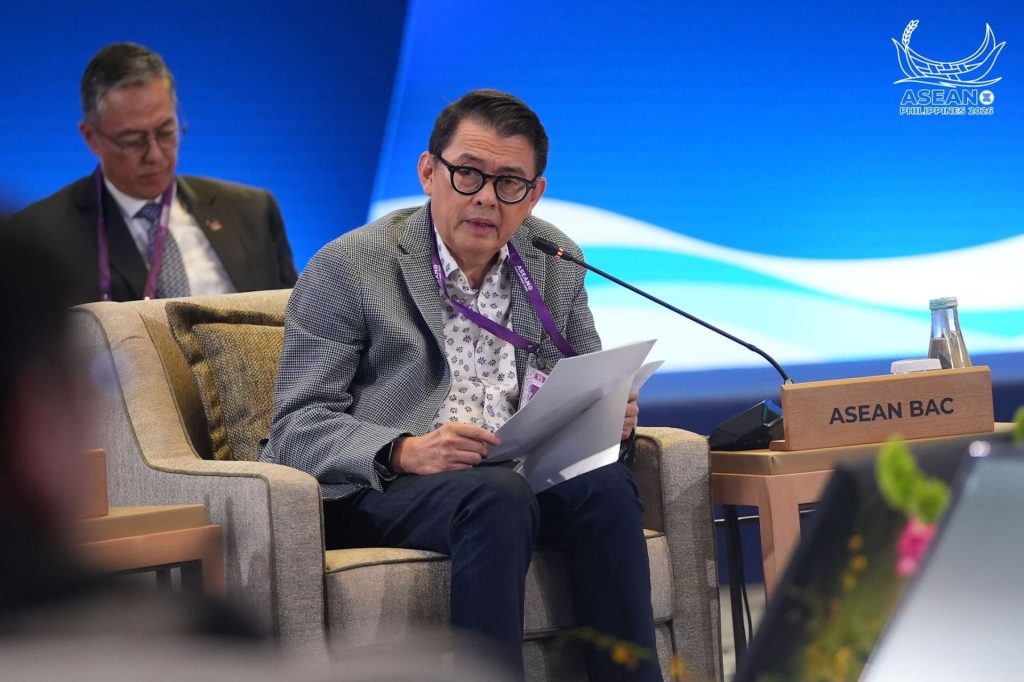
Philippines Now at the Center of an ASEAN Opportunity
April 20, 2026
As the Philippines once again hosts the ASEAN Summit, it will be easy for people to reduce the event to yet another public event and more traffic on the roads. I choose to think it ought to be different.
Every ASEAN hosting is especially significant because it comes only once every 11 years. It’s one chance in more than a decade to place the Philippines at the center of the region’s attention, to shape the agenda, and to turn regional cooperation into tangible gains for our people. We must make these opportunities count.
For ordinary citizens, the question is simple: Will it help create more trabaho (jobs)? Will it help more negosyo (business) grow? This is where the phrase “center of opportunity” should be taken seriously. Being at the center means more than ceremonial leadership. In practical terms, it means the Philippines can connect the region’s needs to local strengths faster than before. It means we can attract investment that builds factories, expands supply chains, modernizes farms, and puts people to work.
The Philippines has everything in place to do that: a young and talented workforce, a growing consumer market, a strategic location, and the ability to host and coordinate across cultures. So, as we get into the thick of hosting the event in the coming weeks and months, we should ask ourselves how these high-level meetings can translate into something that ASEAN citizens can actually benefit from.
Job generation is often discussed in broad terms, but in reality, jobs come from specific decisions: when a manufacturer expands production, when a company sets up a regional operation, or when a small business opens to a larger market. ASEAN is well-positioned to encourage these decisions because every member-state brings real needs and real strengths. Each country has businesses looking for buyers, raw materials, skilled workers, and dependable partners. The Philippines, as host, can help turn introductions into investments and conversations into commitments.
In important cross-border trade matters, ASEAN has proven that it can find solutions to help align processes and reduce friction to help firms expand capacity. The meetings and discussions we’ve had so far at ASEAN-BAC have produced plenty of proposed solutions, including the use of interoperable digital payments. Agribusiness, especially, is where job generation becomes deeply meaningful, and the region’s food security becomes a reality. As we have proven in pilot projects and partnerships with the ASEAN Food Security Alliance (AFSA), ASEAN connections can help enterprises source better inputs, resources, and technologies, and meet market needs.
But at the end of the day, we return to jobs and livelihoods because those are what people feel every day. And if job creation is the promise, MSMEs are the mechanism.
Most people view small businesses as mere providers of goods and services, but they employ millions, sustain families, and bring economic growth to local communities. This is why in ASEAN, it is not only about big companies; there are also actions to empower MSMEs.
For two decades, Go Negosyo has championed the 3M framewor − Money, Markets, and Mentorship – to help entrepreneurs start, survive, and scale. MSMEs need financing that reflects their cash flow realities; they need programs that help them inspire banks and investors to feel confident in them. They need mentorship so they can meet the standards that satisfy their customers’ needs. And they need market access and linkages that reduce the distance between them and a larger market.
Today, that mission is expanding through Go Negosyo’s new Trabaho at Negosyo campaign, which fuses MSME support with job fairs so that growth creates opportunities on both sides: helping businesses grow while helping Filipinos find meaningful work. It is a practical model of inclusive growth where enterprise development and employment generation move together.
Such matters of grave impact require deep, meaningful conversations. At a time when it is convenient to conduct meetings through video conferencing platforms, it is tempting to assume that proximity no longer matters. I do not agree. In-person meetings still do something that virtual meetings often cannot: they build trust and reduce misunderstandings.
This is where ASEAN stands apart. ASEAN is strengthened by relationships, mutual respect, and neighbors working toward a shared future. When partners in the region meet in person, the bonds of the ASEAN family grow stronger. They can move past general statements and discuss realities on the ground as they see them. Businesses are more willing to invest when they can see the real potential on the ground, appreciate how things can work, and figure out how they can fit in the puzzle.
When colleagues meet face-to-face, you see how people communicate. You notice how decisions are made in the room and pick up nuances behind the words. You also sense what matters to the person across from you. Then there are the conversations that happen on the sidelines where insights flow more freely from people engaged in very human conversations.
That is why, despite all the challenges brought on by several global conflicts far from our shores, ASEAN-BAC will still make an effort to bring delegates together, in person. This also gives us the chance to show the best of the Philippines. In Boracay, Cebu, and many other destinations, delegates will see not only beautiful places and world-class facilities, but also the hospitality and creativity of the Filipino people. These moments help inspire tourism, investment, and confidence in our country, and elevate the meetings to more than a seasonal gathering to agree on solutions to problems, define the first practical steps, and follow-ups that lead to real action.
Hosting ASEAN is an honor, and it is also a responsibility. We cannot simply open doors. We must help people walk through them. If we do this well, ASEAN and all the hundreds of meetings scheduled in 2026 will be remembered as a turning point that helped more Filipinos find work, helped more MSMEs grow with confidence, and made deals possible and trust lasting.


2/F RFM Corporate Center, Pioneer cor. Sheridan Sts. Mandaluyong City, Metro Manila, Philippines