

Watching My Daughters Build Their Own Businesses
March 23, 2026
The Values We Teach Our Children
April 8, 2026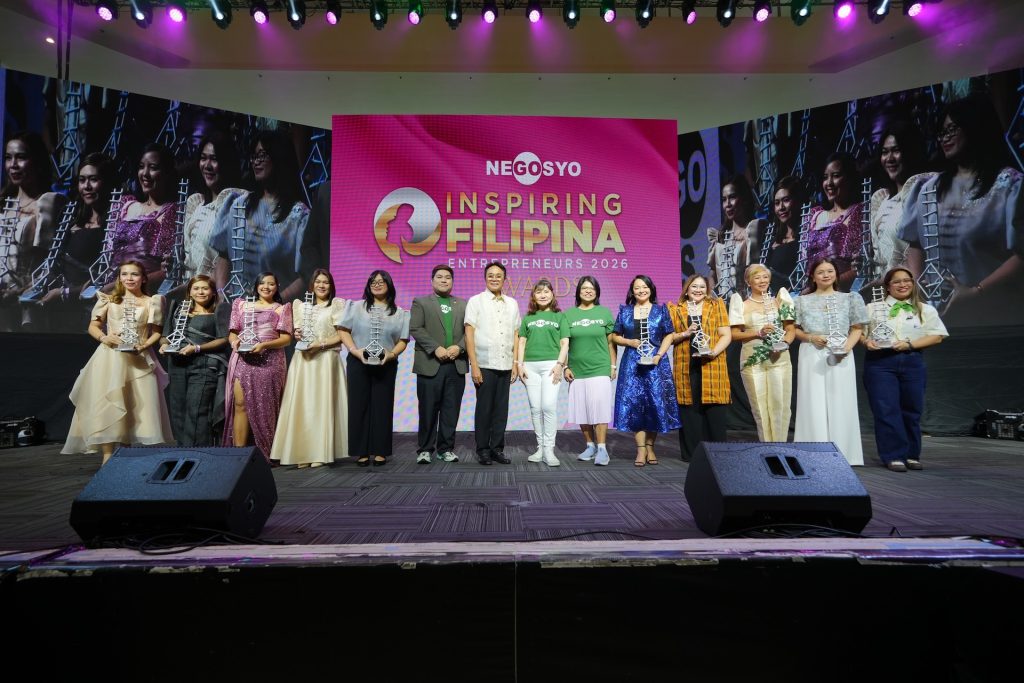


When I talk about MSMEs, I see them as more than economic units but also as engines of social change. Nowhere is this clearer than in the growing number of women-led MSMEs across the Philippines – entrepreneurs who not only create jobs and products, but also uplift communities and expand our perception of women’s roles in households, communities and the nation.
Consider the diversity and impact already on display among the 10 ladies who were awarded this year’s Go Negosyo Inspiring Filipina Entrepreneur Awards. These ladies scaled and diversified their businesses and even innovated in their sectors.
There’s Shella Aranas, who turned her food concept Tuna Republik from a single all-tuna restaurant into a 30-branch enterprise and a franchising platform that creates opportunities for other entrepreneurs. Then there’s Lopemae Hana Bier Bautista, who innovated her family’s citrus farm products by introducing processed citrus concentrates and adding edible flowers to her concoctions; in the process, she helped reduce food waste and raised farmer incomes.
Some of our winners parlayed their experience in the corporate world to launch their own ventures. Like Hazel Gapuz, who worked for years at a ride-hailing company, then used her industry know?how to create Blogapalooza, a platform connecting over 50,000 creators with more than 1,000 brands. By doing so, she helped power the country’s digital economy.
Women-led firms also often embed social purpose into their business models. Former beauty queen Joby Linsangan Moreno saw how there was no middle ground for salons in the provinces because they were either too poor in quality or too pricey for the masses. Her solution was Orange Salons, community beauty parlors that balance quality and affordability while providing free haircuts for seniors and livelihood training for marginalized groups.
Rhea Peñaflorida’s Fiesta Philippines began as a souvenir shop and has grown into a multi-product pasalubong brand that intentionally works with marginalized women, turning entrepreneurship into an avenue for dignity and inclusion. Christine Tiu’s Amami Filipino Heritage Jewelry revived vanishing Filipino jewelry craftsmanship, trains artisans and preserves cultural capital while creating sustainable livelihoods. These enterprises remind us that economic development that ignores social capital and cultural heritage is incomplete.
The story of resilience is also a recurring theme. Franz Erika Badong-Repuyan started Ruyag Native Products Manufacturing with just P1,000 after overcoming personal crises, and she now employs over a hundred grassroots weavers who work from home and are able to care for their families. Maricar Suarez married early at 17, but she didn’t give up on her dreams of earning a college degree. She built a company that now employs more than 9,000 people.
You can also count on women entrepreneurs to imbue their ventures with a nurturing instinct. Zonito Tamase wanted to do her bit for the next generation by offering better and more nutritious choices for families. She began with a capital of P200 selling malunggay pandesal and grew that business to a company that manufactures nutritious drinks through major retail channels.
These entrepreneurs demonstrate the multiplier effect of supporting women: small investments in women often translate into steady household incomes, intergenerational benefits and community stability.
These women make a good case for putting women as an integral part of our MSME strategies, something I am doing in both Go Negosyo and as chair of the ASEAN Business Advisory Council. Time and again, we have seen how helping women entrepreneurs has so many multiplier benefits to the community, and how their unique insights into human needs lead to innovation and inclusivity.
When Tuna Republik, for example, expands its franchise network, it creates jobs and entrepreneurship opportunities for others. When Ruyag hires home-based weavers, it helps create stronger families because the workers don’t need to travel a long way to earn a living.
When Doreen Odvina Malbas, one of this year’s Inspiring Filipina Entrepreneur awardees, decided to create couture shoes that challenged the tradeoff between aesthetics and wearability, she spoke for thousands of women who long wished for this innovation. When Lopemae Bautista looked for a way to turn surplus harvests into marketable goods, she also addressed a longstanding problem of food waste on her farm. Women are simply better at spotting underserved markets, and from what I’ve seen, are more likely to include their neighbors (and by extension, the larger community) as part of their operations. As a consequence, they strengthen social networks while still making profits. Good neighbors make for good neighborhoods.
There are policy and program priorities that can unlock the full potential of women-led MSMEs. Like most MSMEs, women-led enterprises need access to money, markets and mentorship, or the three M’s of successful entrepreneurship. But all these should consider women’s realities, including home-based work, mobility constraints and caregiving responsibilities, which are very real barriers that limit women’s ability to grow businesses. Public and private investment in affordable child care, safe transport and local markets reduces opportunity costs and frees women to scale operations.
My wish, as it has been for the many years that we’ve been handing out the Inspiring Filipina Entrepreneurs Awards, is for there to be a time when a successful woman-led MSME is not the exception, but rather the norm. Yes, their stories inspire, but inspiration without structural support is hollow. These women-led businesses deserve scaling and support, not just celebration.
When we invest in women-led MSMEs, we invest in jobs, culture, better nutrition, skills transmission and more inclusive growth. In a country where MSMEs form the backbone of the economy, centering women is just plain smart economics.
So how do we help them along? We need to fund them, buy from them, mentor them and design policies that remove cultural and societal barriers that make it difficult for women to found and grow their businesses.
If we put women at the heart of MSME development – with the right finance, tailored capacity-building, infrastructure, procurement and networks – we invest in inclusive and lasting growth.
Originally Published in Philippine Star
Let’s get in touch.
We’d love to hear from you.
2/F RFM Corporate Center, Pioneer cor. Sheridan Sts. Mandaluyong City, Metro Manila, Philippines